MANY WAYS OF PRAYING
"Prayer is an experience and the experience itself is what changes the heart, and grows a centred life. Each moment in prayer that brings us into ourselves, into the heart of God, also sends us out in better relationship to the world and others in our lives." (http://www.catchingfire.qld.edu.au/Home )
According to the Catechism of the Catholic church, vocal prayer, meditation and contemplative prayer are the three main expressions of prayer in the Christian tradition (Nolen, 2008). The challenge for each of us is to find the style of prayer that enables us to grow in an ever-increasing awareness that God desires our response in love.
According to the Catechism of the Catholic church, vocal prayer, meditation and contemplative prayer are the three main expressions of prayer in the Christian tradition (Nolen, 2008). The challenge for each of us is to find the style of prayer that enables us to grow in an ever-increasing awareness that God desires our response in love.
One way of categorizing 'prayer experiences' could be as follows:
traditional prayers
"Traditional Catholic prayers are like family heirlooms passed on from generation to generation. They include many of the best known Catholic prayers such as The Lord's Prayer, Hail Mary, and Apostles' Creed." (Loyola Press).
formal & informal prayers
Formal and informal prayers may include prayers of praise, thanksgiving, petition and sorrow. They may for example,be based in scripture or be spontaneous utterances.
contemplative prayer
Contemplative prayer may be practiced through methods such as silence, mantras and breath prayer. Christian Meditation is an excellent form of Contemplative Prayer to explore with your students. (See the WCCM website and "Coming Home" by the Catholic Education Diocese of Townsville)
meditation
Prayer through meditation may include using scripture (eg Lectio Divina), guided imagery (eg The Examen), story, nature, music and art.
One particular form of prayer that uses meditation techniques has been developed by Sybil MacBeth. This website provides resources for the technique she devised called "Praying in Color". (Click on this to learn more)
One particular form of prayer that uses meditation techniques has been developed by Sybil MacBeth. This website provides resources for the technique she devised called "Praying in Color". (Click on this to learn more)
other methods of prayer
There are many more ways to pray. Some examples include prayer writing and music/songs, poetry and journal writing.
"Praying by writing takes a prayer out of my head and makes praying a
whole-body exercise: my creativity is sparked, my spirit fully focused, my
muscles employed, my sense of touch and awareness of breath heightened.
I felt more connected to prayer than I had ever experienced before."
(Rachel Hackenberg, "Writing to God: 40 days of praying with my Pen")
whole-body exercise: my creativity is sparked, my spirit fully focused, my
muscles employed, my sense of touch and awareness of breath heightened.
I felt more connected to prayer than I had ever experienced before."
(Rachel Hackenberg, "Writing to God: 40 days of praying with my Pen")
a) Prayer with writing
Writing to God offers a form of prayer and reflection.
Writing to God offers a form of prayer and reflection.
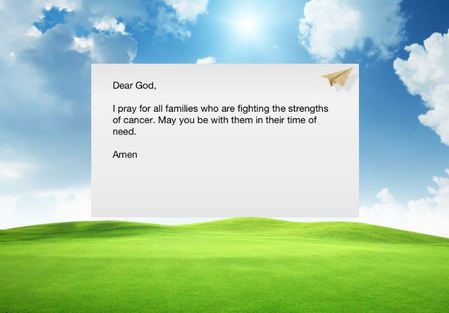
Students can write prayer in the form of a letter. The best thing about writing a prayer letter to God is that it keeps you focused. When you are writing your direct thoughts, concerns, and praises, it is really hard for your mind to think of something else.
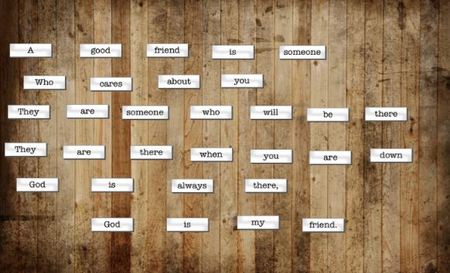
Prayer can be written as a form of poetry:
Prayer can be written and kept in a journal - hard copy or electronic. As well as providing a style of prayer that our "word smart" and "picture smart" learners might prefer, a diary or a journal of prayers allows students to look back and reflect on what they prayed about. Much has been written in recent years about the benefits of using a gratitude journal. It is a small step then to take this idea and more in the the style of prayer, students might create a 'Graced moments' journal where they are encouraged to reflect on the day and name/draw when and how God was present. (In a style similar to the Examen).
Prayer can also be mapped. Using concept maps allows students to sort through their feelings/thoughts and engage in deeper levels of reflection and questioning.
Prayer can also be mapped. Using concept maps allows students to sort through their feelings/thoughts and engage in deeper levels of reflection and questioning.
b) Prayer with music & songs
Prayer with music and songs may include meditation-style music, recordings of children singing, YouTube clips, musical instruments and so forth. We suggest that you remember to ensure that the choice is appropriate, and to 'bookend' such an experience with an opening and closing prayer. (refer CESA's "Being with God" document, pg 14 - the difference between Prayer & Reflection)
Prayer with music and songs may include meditation-style music, recordings of children singing, YouTube clips, musical instruments and so forth. We suggest that you remember to ensure that the choice is appropriate, and to 'bookend' such an experience with an opening and closing prayer. (refer CESA's "Being with God" document, pg 14 - the difference between Prayer & Reflection)
